
Search in Everything
Showing results in Everything for Gulo gulo
Information
Gulo gulo wolverine
retractable and a very powerful bite, with which they crush bone. They are rarely seen by humans because of their low population densities and the remote terrain in which they live. There are two subspecies of wolverines: North American wolverines (G. gulo luscus) and European wolverines (G. gulo gulo). Differences seem to be mainly genetic and probably as a result of the isolation of these two continental populations. Another possible subspecies on Vancouver Island, Canada: G. gulo vancouverensis. This
Mustelidae badgers, otters, weasels, and relatives
mustelid species. The smallest species is the least weasel (Mustela nivalis), weighing between 35 and 250 grams. Wolverines (Gulo gulo) and sea otters (Enhydra lutris) reach 32 kg and 45 kg, respectively. All mustelids have well developed anal scent glands, which serve various functions, including territorial marking and defense. Members of the family Mustelidae inhabit all continents except Antarctica and Australia. They do not occur on Madagascar or oceanic islands, but have been introduced to New Zealand
Falco rusticolus gyrfalcon
and most mortalities occur to young inexperienced birds or ones that become injured. Some animals of the north that may feed upon Gyrfalcons include Arctic fox (Alopex lagopus), red fox (Vulpes velox), grizzly bear (Ursus arctos), wolverine (Gulo gulo), and great horned owls (Bubo virginianus) (Poole 1987; Cade 1982). Unlike eagles which use their large size to rob meals, and peregrine falcons which use gravity to gain tremendous speed, the gyrfalcon uses raw power to capture prey, usually in a tail chase
Falco peregrinus peregrine falcon
Small prey (such as bats) may be eaten in flight. Though peregrine falcons, like other birds of prey, are considered to be near the top of the food chain, they are not completely free from predators. Adults may be killed by other, large birds of prey, such as great horned owls (Bubo virginianus), gyrfalcons (Falco rusticolus) and golden eagles (Aquila chrysaetos). Nestlings and fledglings may be taken by mammalian predators such as cats (Felis), bears (Ursus), wolverines (Gulo gulo), or foxes (Vulpes
Ovis dalli Dall's sheep
populations severely if no other prey is available. Coyotes (Canis latrans), golden eagles (Aquila chrysaetos), lynx (Lynx canadensis), grizzly bears (Ursus arctos), black bears (Ursus americanus), and wolverines (Gulo gulo) are also predators. Deaths from accidental falls and avalanches are also common (Wilson and Ruff, 1999). Deep snow, low temperatures, high population density, disease, low-quality forage, and predation are primary sources of mortality, especially among lambs (Bowyer and Leslie, 1992
Anser rossii Ross's goose
hatchling stages. The most common predators of the eggs and gosling are parasitic jaegers (Stercorarius parasiticus), glaucous gulls (Larus hyperboreus), long-tailed jaegers (Stercorarius longicaudus), and herring gulls (Larus argentatus). Predators of both eggs and adult geese include arctic foxes (Alopex lagopus), gray wolves (Canis lupus), wolverines (Gulo gulo), and grizzly bears (Ursus arctos).To avoid an attack during incubation, female Ross's geese will vocalize, hiss, and assume a prone position
Martes martens
and do not often come down to the ground. The American marten (M. americana) is associated with coniferous and mixed forests with overhead cover and a dense underbrush. Species occupy exceptionally large territories, the males larger than the females, ideal territories are highly productive and have high canopy cover. Martes is located inside the subfamily Guloninae which also contains 'Wolverines Gulo', the Fisher 'Pekania', and the 'Tayra Eira'. The fisher used to be a member of Martes before genetic data
Pictures

Gulo gulo wolverine

Gulo gulo wolverine
Specimens

Gulo gulo wolverine
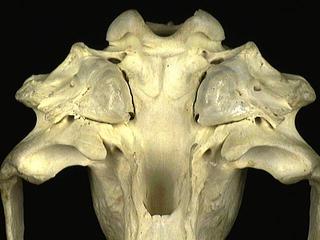
Gulo gulo wolverine

Gulo gulo wolverine
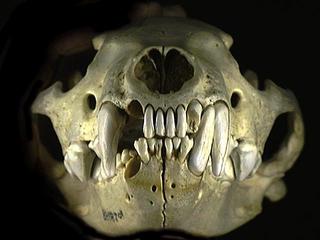
Gulo gulo wolverine

Gulo gulo wolverine
Classification
Galeocharax gulo Cacunda; Denton
Gulo wolverines
Gulo gulo wolverine