
Search in Everything
Showing results in Everything for Python bivittatus
Information
Python molurus Indian Python
woodlands, scrublands, grassy marshes, and semi rocky foothills. They are usually found in habitats with areas that can provide sufficient cover. This species is never found very far from water sources, and seems to prefer very damp terrain. Indian pythons are divided into two recognized subspecies, which can be distinguished by physical characteristics. Burmese pythons, P. molurus bivitatus, can grow to lengths of about 7.6 m (25 ft), and can weigh as much as 137 kg (300 lbs.). Indian pythons, P. molurus
Python sebae African Rock Python
livelihood of the native peoples. African rock pythons can also be a danger to humans. Although it is rare that a python will attack without provocation, there are several reports of rock python attacks on humans. Often, a human will startle a snake, causing it to bite. More rarely, the python may even constrict a human to death, and smaller humans have been eaten in extremely unusual circumstances. Although people are occasionally killed by pythons, the pythons are not always killed in retaliation. The
Python reticulatus Reticulated Python
nest they are incubating or look to incubate. Like all snakes, Python reticulatus is virtually deaf to airborne noises and is visually restricted due to immovable eyelids. This requires the python to rely on its sense of smell and touch to locate predators and prey. The reticulated python does not have ears, instead it has an ossicle organ called "columella" which allows the python to sense the vibrations in the ground. Due to the absence of ears, snakes and other pythons must use physical movements to
Python regius Ball Python, Royal Python
most are imported from Africa. Approximately 30,000 to 50,000 ball pythons are exported annually to America, mostly as hatchlings from wild pythons. Ball pythons are easily handled snakes, which is what makes them good pets. Trappers of ball pythons tend to be economically vulnerable, which drives them towards trapping these snakes for export. Ball pythons are also occasionally eaten. There are few negative effects of ball pythons on humans, as these snakes do not tend to be aggressive. Because of their
Nerodia clarkii Salt Marsh Snake
endoparasites that live in the respiratory system of vertebrates. Two species of tongue worms have been documented in salt marsh snakes: tongue worms (Kiricephalus coarctatus), and invasive snake lungworms (Raillietiella orientalis), introduced through Burmese pythons (Python bivittatus). Both of these species infect the respiratory tract of their hosts. Salt marsh snakes are occasionally sold in the pet trade, with prices starting around $125. Although salt marsh snakes are typically not aggressive, they
Pictures

Python molurus Indian Python

Python reticulatus Reticulated Python

Python brongersmai Red Blood Python, Malaysian Blood Python, Sumatran Blood Python
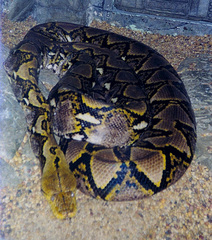
Python reticulatus Reticulated Python
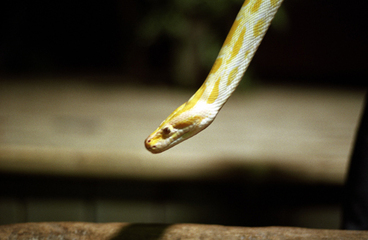
Python