
Search in Everything
Showing results in Everything for Saguinus imperator
Information
Saguinus imperator emperor tamarin
Emperor tamarins inhabit vast Amazonian tropical forest regions in southeast Peru, northwest Bolivia, and northwest Brazil. Several river drainages in Peru, including the Acre, Purus, and Jurua have populations of this species. Saguinas imperator is found in various forms of light, dry-bottom to densely grown Amazonian forest margins in seasonally inundated regious. If these areas, their territories are between 75-100 acres and also span open woodlands and secondary growth. This species is arboreal
Saguinus graellsi Graells's tamarin
18 years, population size will decrease 20% to 25%. Graell’s tamarins were previously considered a subspecies of black-mantled tamarins (Saguinus nigricollis). In 2003, Graell’s black-mantle tamarins (Saguinus nigricollis graellsi) were rated “least concern” on the list. CITES does not list Saguinus graellsi in its appendices (as a separate species or as a subspecies of Saguinus nigricollis) as a trade-restricted species. Saguinus graellsi was previously recognized as a subspecies of Saguinus
Saguinus mystax black-chested mustached tamarin
There are three recognized subspecies of mustached tamarins: Saguinus mystax mystax, Saguinus mystax pileatus, and Saguinus mystax pluto. All three subspecies are found in the middle Amazon region of northern Peru and western Brazil. Mustached tamarins prefer dry, upland forests in the Amazonian lowland and avoid flooded forests. Mustached tamarins, being callitrichines, have distinguishing features that set them apart from other New World monkeys. These include their diminutive body size and the presence
Saguinus midas Midas tamarin
Saguinus nigricollis black-mantled tamarin
male mating partners, though they may also have only one. (Macdonald 1984, Nowak 1999, Rowe 1996) Saguinus nigricollis has a gestation period of about 140 days, at which time females give birth to twins (78% of births). Birth to one offspring occurs 21% of the time, while three offspring occur 1% of the time. Black-mantled Tamarins give birth year-round and have a birth interval of about 8.4 months. (Macdonald 1984, Nowak 1999, Rowe 1996) In the genus Saguinus the father, and occasionally other adult group
Saguinus labiatus red-chested mustached tamarin
Red-chested mustached tamarins, Saguinus labiatus, are found in South America and are found in particularly high densities (up to 45 individuals per sq km) in northwestern Bolivia (Suarez 2007). Red-chested mustached tamarins also inhabit the middle Amazonian region of Brazil as well as southeastern Peru (Wolfheim 1983). Red-chested mustached tamarins inhabit Amazonian rainforests. They are arboreal and spend most of their time in primary and secondary forests (Porter 2004, Mittermeier and Wallace 2008
Saguinus geoffroyi Geoffroy's tamarin
The range inhabited by Saguinus geoffroyi extends from southeastern Costa Rica to extreme northwestern Colombia (Nowak, 1999). Saguinus geoffroyi is the only callithricid whose range extends from South America as far north as Costa Rica (Grzimek, 1990). Saguinus geoffroyi lives in an area of shrubbery, grasses and secondary growth. This species often lives in disturbed forests and has been historically associated with slash and burn agriculture. S. geoffroyi inhabits areas with highly dense foilage and
Saguinus tripartitus golden-mantled tamarin
between 140 and 150 days. Information regarding lactation periods of Saguinus could not be found. No generalizations could be made about the breeding seasons of the whole genus based on the information available. However, Saguinus fuscicollis breeds between April and October, and Saguinus oedipus and Saguinus geoffroyi breed between January and February. The age to sexual maturity varies between 15 and 24 months for Saguinus species. Like other tamarin species, S. tripartitus gives birth to twins. Patterns
Saguinus bicolor Brazilian bare-faced tamarin
Native to the Brazilian rainforest, Saguinus bicolor is found in a small region north of the Amazon River. Brazilian bare-faced tamarins are an arboreal species that prefers secondary forests, swamps, edge and white sand forests. They are usually found from 10 to 12 meters up in the canopy. Brazilian bare-faced tamarins are named for their black, hairless face and ears contrasted with variable fur colors such as brown, black, or silver, depending on the subspecies. Body length ranges from 208 to 283 mm and
Saguinus oedipus cotton-top tamarin
Northwest Colombia Cotton-top tamarins inhabit tropical rainforests, open woodlands, and secondary growth. They are sensitive to any alteration in their habitat. Cotton-top tamarins are distinguished from other members of the genus Saguinus by possessing a crest of long whitish hair from the forehead to the nape flowing over the shoulders. Their back is brown and the underparts of the arms and legs are whitish to yellow. The rump and inner sides of thighs are reddish-orange. The base of the tail is also
Callimico goeldii Goeldi's marmoset; Goeldi's monkey
emperor tamarins (Saguinus imperator), and saddleback tamarins (Saguinus fuscicollis), although combined group sizes have not been reported.Due to their small group sizes and large geographic range, groups of Goeldi's marmosets rarely come into contact with each other in the wild. If groups do come into contact, they typically confront each other with vocal calls and chasing behaviors. Goeldi's marmosets use vocal calls to express their behavior and attitude throughout the day.The strong social bond between
Pictures
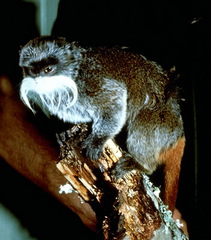
Saguinus imperator emperor tamarin
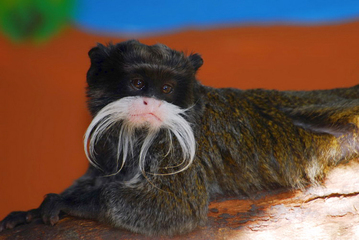
Saguinus imperator emperor tamarin

Saguinus imperator emperor tamarin

Saguinus imperator emperor tamarin

Saguinus imperator emperor tamarin
Specimens

Saguinus geoffroyi Geoffroy's tamarin
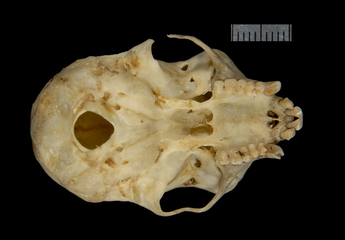
Saguinus graellsi Graells's tamarin
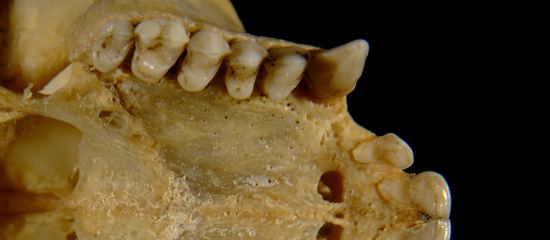
Saguinus midas Midas tamarin
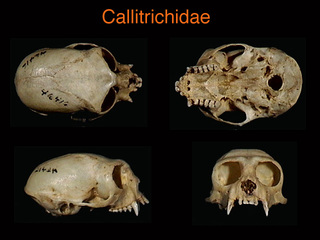
Saguinus midas Midas tamarin

Saguinus mystax black-chested mustached tamarin
Classification
Saguinus imperator emperor tamarin