
Geographic Range
The fragile papershell is found throughout the Mississippi drainage, in the Gulf of Mexico drainage from Alabama to Texas. It is also found in the St. Lawrence river drainage from Lake St. Clair to Quebec City.
In Michigan,
L. fragilis
is found in the lower peninsula from the Muskegon River drainages to the southern
part of the state. In eastern Michigan this species is found through the Saginaw
and Lake Erie drainage systems.
Habitat
The fragile papershell is found in various sized water bodies, from headwater streams
to rivers and lakes. Substrates it inhabits include mud and gravel, but is sometimes
found in sand.
- Habitat Regions
- freshwater
- Aquatic Biomes
- rivers and streams
Physical Description
The fragile papershell is up to 15 cm (6 inches) long , and is oval or oblong in shape. The shell is usually fairly thin and compressed. Younger individuals have a dorsal wing. The anterior end is uniformly rounded and the posterior end broadly rounded with an acute angle, depending on the wear on the wing. The dorsal margin varies depending on the wing. The ventral margin is uniformly rounded.
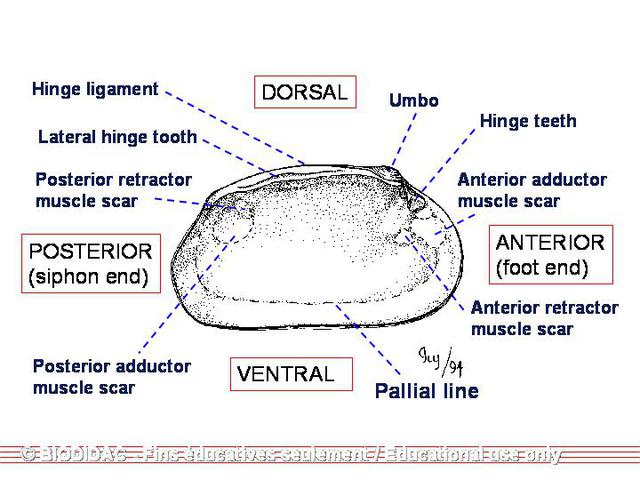
Umbos are low, slightly elevated above the hinge line, and situated more near the anterior end. The beak sculpture has three or four weak ridges, the first concentric and the second double looped.
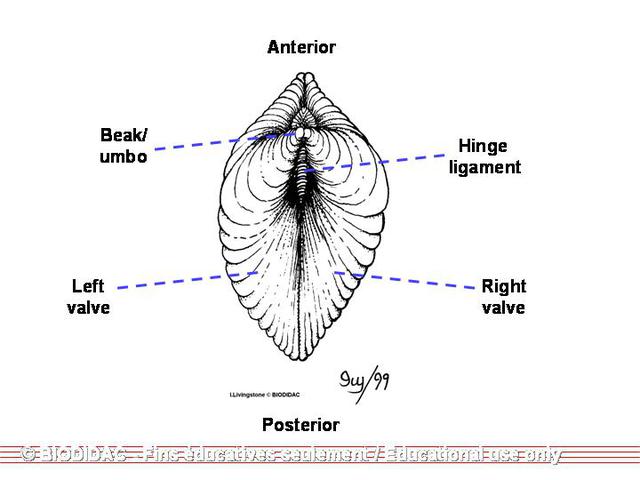
The periostracum (outer shell layer) is smooth, and younger individuals are light yellow-tan, sometimes with green bands. Older specimens tend to be darker yellow-brown. Usually umbos are darker than the rest of the shell.
On the inner shell, the left valve has two pseudocardinal teeth , which are thin and the second tooth is sometimes absent. The two lateral teeth are thin, short and slightly curved. The right valve has one thin and low pseudocardinal tooth. The lateral tooth is thin and slightly curved.
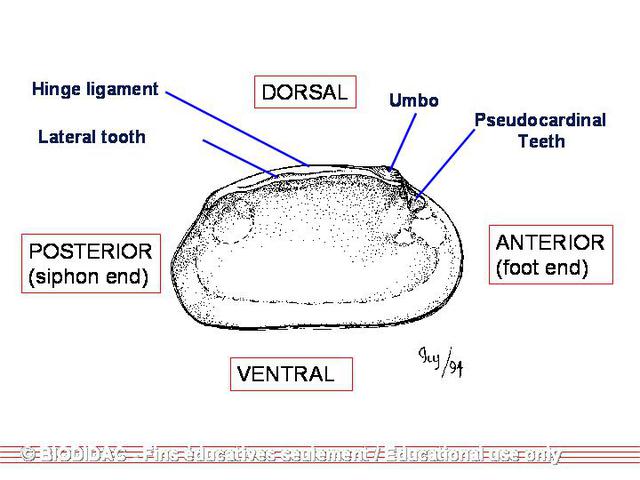
The beak cavity is shallow or absent. The nacre is bluish-white or yellowish, pink or purple under the umbo or lateral tooth, and iridescent throughout.
In Michigan, this species can be confused with the
white heelsplitter
or
pink heelsplitter
. The white heelsplitter is darker in color, more rounded in shaped, usually rayed,
and has a purple nacre. The pink heelsplitter is also darker and has a more broadly
rounded posterior end.
- Other Physical Features
- ectothermic
- heterothermic
- bilateral symmetry
- Sexual Dimorphism
- sexes alike
Development
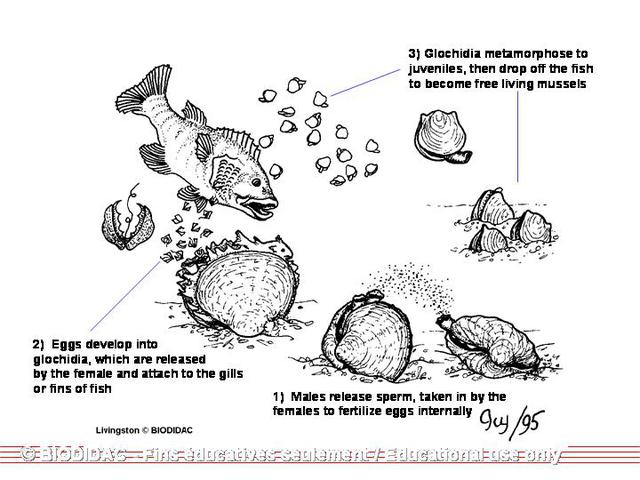
Fertilized eggs are brooded in the marsupia (water tubes) up to 11 months, where they
develop into larvae, called glochidia. The glochidia are then released into the water
where they must attach to the gill filaments and/or general body surface of the host
fish. After attachment, epithelial tissue from the host fish grows over and encapsulates
a glochidium, usually within a few hours. The glochidia then metamorphoses into a
juvenile mussel within a few days or weeks. After metamorphosis, the juvenile is
sloughed off as a free-living organism. Juveniles are found in the substrate where
they develop into adults.
- Development - Life Cycle
- metamorphosis
Reproduction
Age to sexual maturity for this species is unknown. Unionids are gonochoristic (sexes are separate) and viviparous. The glochidia, which are the larval stage of the mussels, are released live from the female after they are fully developed.
In general, gametogenesis in unionids is initiated by increasing water temperatures. The general life cycle of a unionid , includes open fertilization. Males release sperm into the water, which is taken in by the females through their respiratory current. The eggs are internally fertilized in the suprabranchial chambers, then pass into water tubes of the gills, where they develop into glochidia.
Leptodea fragilis
is a long-term brooder. Although there are no recorded data, it probably spawns
in the summer months in Michigan.
- Key Reproductive Features
- seasonal breeding
- gonochoric/gonochoristic/dioecious (sexes separate)
- sexual
- fertilization
- viviparous
Females brood fertilized eggs in their marsupial pouch. The fertilized eggs develop into glochidia. There is no parental investment after the female releases the glochidia.
- Parental Investment
-
pre-fertilization
- provisioning
-
pre-hatching/birth
-
provisioning
- female
-
provisioning
Lifespan/Longevity
The age of mussels can be determined by looking at annual rings on the shell. However, no demographic data on this species has been recorded.
Behavior
Mussels in general are rather sedentary, although they may move in response to changing
water levels and conditions. Although not thoroughly documented, the mussels may
vertically migrate to release glochidia and spawn. Often they are found buried under
the substrate.
Communication and Perception
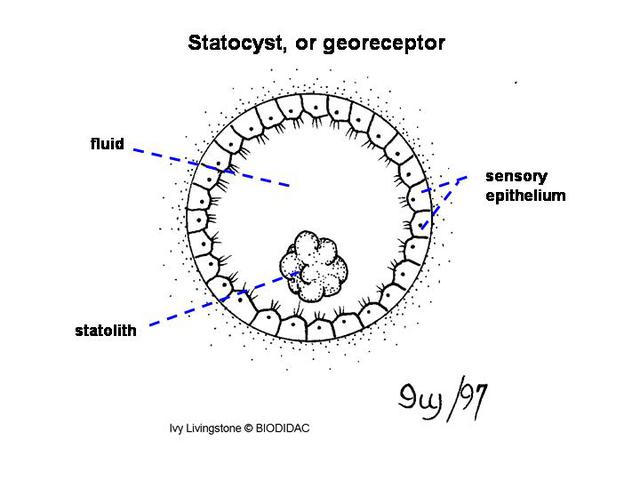
The middle lobe of the mantle edge has most of a bivalve's sensory organs. Paired statocysts , which are fluid filled chambers with a solid granule or pellet (a statolity) are in the mussel's foot. The statocysts help the mussel with georeception, or orientation.
Mussels are heterothermic, and therefore are sensitive and responsive to temperature.
Unionids in general may have some form of chemical reception to recognize fish hosts. Mantle flaps in the lampsilines are modified to attract potential fish hosts. How the fragile papershell recognizes and/or attracts its fish host is unknown.
Glochidia respond to touch, light and some chemical cues. In general, when touched
or a fluid is introduced, they will respond by clamping shut.
- Communication Channels
- chemical
- Perception Channels
- visual
- tactile
- vibrations
- chemical
Food Habits
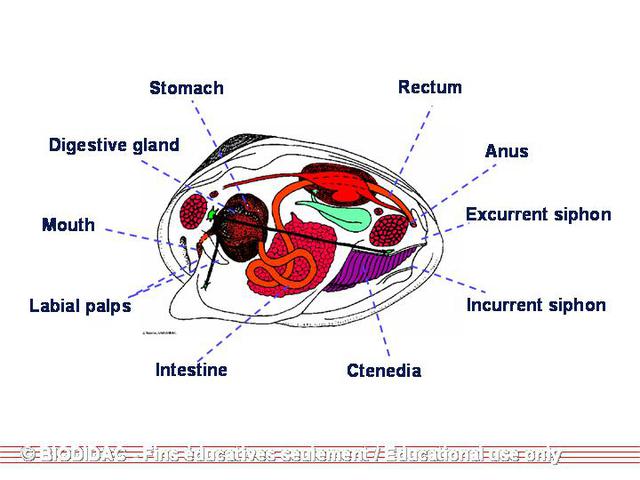
In general, unionids are filter feeders. The mussels use cilia to pump water into the incurrent siphon where food is caught in a mucus lining in the demibranchs. Particles are sorted by the labial palps and then directed to the mouth. Mussels have been cultured on algae, but they may also ingest bacteria, protozoans and other organic particles.
The parasitic glochidial stage absorbs blood and nutrients from hosts after attachment.
Mantle cells within the glochidia feed off of the host’s tissue through phagocytocis.
- Primary Diet
- planktivore
- detritivore
- Plant Foods
- algae
- phytoplankton
- Other Foods
- detritus
- microbes
- Foraging Behavior
- filter-feeding
Predation
Unionids in general are preyed upon by muskrats , raccoons , minks , otters , and some birds. Juveniles are probably also fed upon by freshwater drum , sheepshead , lake sturgeon , spotted suckers , redhorses , and pumpkinseeds .
Unionid mortality and reproduction is affected by unionicolid mites and monogenic
trematodes
feeding on gill and mantle tissue. Parasitic
chironomid
larvae may destroy up to half the mussel gill.
Ecosystem Roles
Fish hosts are determined by looking at both lab transformations and natural infestations. Looking at both is necessary, as lab transformations from glochidia to juvenile may occur, but the mussel may not actually infect a particular species in a natural situation. Natural infestations may also be found, but glochidia will attach to almost any fish, including those that are not suitable hosts. Lab transformations involve isolating one particular fish species and introducing glochidia either into the fish tank or directly inoculating the fish gills with glochidia. Tanks are monitored and if juveniles are later found the fish species is considered a suitable host.
Natural infestations of
Leptodea fragilis
have been found on the
freshwater drum
(also called the sheepshead). However, no glochidial metamorphosis has been observed.
- Ecosystem Impact
- parasite
Economic Importance for Humans: Positive
Mussels are ecological indicators. Their presence in a water body usually indicates good water quality.
Economic Importance for Humans: Negative
There are no significant negative impacts of mussels on humans.
Conservation Status
Leptodea fragilis
is listed as Endangered in Vermont and Threatened in Virginia.
Additional Links
Contributors
Renee Sherman Mulcrone (author).
- Nearctic
-
living in the Nearctic biogeographic province, the northern part of the New World. This includes Greenland, the Canadian Arctic islands, and all of the North American as far south as the highlands of central Mexico.

- native range
-
the area in which the animal is naturally found, the region in which it is endemic.
- freshwater
-
mainly lives in water that is not salty.
- ectothermic
-
animals which must use heat acquired from the environment and behavioral adaptations to regulate body temperature
- heterothermic
-
having a body temperature that fluctuates with that of the immediate environment; having no mechanism or a poorly developed mechanism for regulating internal body temperature.
- bilateral symmetry
-
having body symmetry such that the animal can be divided in one plane into two mirror-image halves. Animals with bilateral symmetry have dorsal and ventral sides, as well as anterior and posterior ends. Synapomorphy of the Bilateria.
- metamorphosis
-
A large change in the shape or structure of an animal that happens as the animal grows. In insects, "incomplete metamorphosis" is when young animals are similar to adults and change gradually into the adult form, and "complete metamorphosis" is when there is a profound change between larval and adult forms. Butterflies have complete metamorphosis, grasshoppers have incomplete metamorphosis.
- seasonal breeding
-
breeding is confined to a particular season
- sexual
-
reproduction that includes combining the genetic contribution of two individuals, a male and a female
- fertilization
-
union of egg and spermatozoan
- internal fertilization
-
fertilization takes place within the female's body
- viviparous
-
reproduction in which fertilization and development take place within the female body and the developing embryo derives nourishment from the female.
- parasite
-
an organism that obtains nutrients from other organisms in a harmful way that doesn't cause immediate death
- motile
-
having the capacity to move from one place to another.
- sedentary
-
remains in the same area
- chemical
-
uses smells or other chemicals to communicate
- visual
-
uses sight to communicate
- tactile
-
uses touch to communicate
- vibrations
-
movements of a hard surface that are produced by animals as signals to others
- chemical
-
uses smells or other chemicals to communicate
- phytoplankton
-
photosynthetic or plant constituent of plankton; mainly unicellular algae. (Compare to zooplankton.)
- detritus
-
particles of organic material from dead and decomposing organisms. Detritus is the result of the activity of decomposers (organisms that decompose organic material).
- filter-feeding
-
a method of feeding where small food particles are filtered from the surrounding water by various mechanisms. Used mainly by aquatic invertebrates, especially plankton, but also by baleen whales.
- parasite
-
an organism that obtains nutrients from other organisms in a harmful way that doesn't cause immediate death
- planktivore
-
an animal that mainly eats plankton
- detritivore
-
an animal that mainly eats decomposed plants and/or animals
References
Arey, L. 1921. An experimental study on glochidia and the factors underlying encystment. J. Exp. Zool. , 33: 463-499.
Brusca, R., G. Brusca. 2003. Invertebrates . Sunderland, Massachusetts: Sinauer Associates, Inc..
Burch, J. 1975. Freshwater unionacean clams (Mollusca: Pelecypoda) of North America . Hamburg, Michigan: Malacological Publications.
Cummings, K., G. Watters. 2004. "Mussel/Host Data Base" (On-line). Molluscs Division of the Museum of Biological Diversity at the Ohio State University. Accessed September 27, 2005 at http://128.146.250.63/Musselhost/ .
Cummings, K., C. Mayer. 1992. Field guide to freshwater mussels of the Midwest . Champaign, Illinois: Illinois Natural History Survey Manual 5. Accessed August 25, 2005 at http://www.inhs.uiuc.edu/cbd/collections/mollusk/fieldguide.html .
Hove, M. 2004. "Links to each state's listed freshwater mussels, invertebrates, or fauna" (On-line). Accessed September 21, 2005 at http://www.fw.umn.edu/Personnel/staff/Hove/State.TE.mussels .
Howard, A., B. Anson. 1922. Phases in the parasitism of the Unionidae. Journal of Parasitology , 9: 68-82.
Lefevre, G., W. Curtis. 1912. Experiments in the artificial propagation of fresh-water mussels. Proc. Internat. Fishery Congress, Washington. Bull. Bur. Fisheries , 28: 617-626.
Lefevre, G., W. Curtis. 1910. Reproduction and parasitism in the Unionidae. J. Expt. Biol. , 9: 79-115.
Meglitsch, P., F. Schram. 1991. Invertebrate Zoology, Third Edition . New York, NY: Oxford University Press, Inc.
Oesch, R. 1984. Missouri naiades, a guide to the mussels of Missouri . Jefferson City, Missouri: Missouri Department of Conservation.
Watters, G. 1995. A guide to the freshwater mussels of Ohio . Columbus, Ohio: Ohio Department of Natural Resources.
van der Schalie, H. 1938. The naiad fauna of the Huron River, in southeastern Michigan. Miscellaneous Publications of the Museum of Zoology, University of Michigan , 40: 1-83.