
Search in Everything
Showing results in Everything for Mantodea
Information
Martes melampus Japanese marten
eunomus, and Emberiza cioides ciopsis, invertebrates: Coleoptera and Mantodea centipedes and spiders, Scolopendra subspinipes, frogs and their eggs: Rana tsushimensis, earthworms, fish, gastropods, and crustaceans: Ligia exotica and Sesarma haematocheir.Japanese martens adapt their fruit and berry foraging to local plant phenology. In the presence of interspecific competitors or human disturbance, they change to alternative food resources, making them more adaptable than Mustela sibirica and Felis
Boisea rubrolineata western boxelder bug
Predators of western boxelder bugs mostly include rodents and birds. Species in the order Rodentia, such as rats, chipmunks, and mice have been reported to prey on western boxelder bugs, as have birds like geese and ducks (family Anseridae) as well as guinea hens and chickens (family Galiiformes). Western boxelder bugs are often eaten by other arthropods, such as spiders (order Araneae), wheel bugs (Arilus spp.), and praying mantises (order Mantodea). Western boxelder bugs typically live and feed on trees
or in dark areas. Additionally, adult masked hunters have wings that assist in capturing prey and escaping predators. There are animals that prey on masked hunters despite their camouflage. Predators include birds (class Aves), rodents (order Rodentia), spiders (order Araneae), mantises (order Mantodea). Other assassin bugs (family Reduviidae) also eat masked hunters, though they eat mostly nymphs. Cliff swallows (Petrochelidon pyrrhonota) commonly prey on masked hunters, likely because masked hunters
known to prey on chrysalises, and frogs and toads (order Anura), spiders (order Araneae), and praying mantises (order Mantodea) prey on adult butterflies. Wasps (order Hymenoptera) and insect-eating birds (class Aves) prey on both caterpillars and adults. There is limited information on the ecosystem roles specific to anise swallowtails. In general, butterfly species feed on nectar from flowers. As they move between flowers of the same plant species, they transfer pollen between individuals and thus play a
hunger. Adult hornets also click their mandibles as a warning to organisms that come too close to their nest or a nest that they have taken over. Vespa mandarinia is a primarily insectivorous omnivore. Workers prey mainly on beetles (Coleoptera), but they also will hunt hornworms (Manduca), mantids (Mantodea), and eusocial wasp and bee species.Vespa mandarinia is the only eusocial wasp species to attack beehives and other eusocial wasp nests. Colonies of Apis mellifera, Apis cerana, and all sympatric Vespa
Calumma parsonii Parsons chameleon
extremely low vibrations, similar to producing purrs, that are thought to be a way a communication through species. Chameleons are stationary ambush predators. Parson's chameleons are omnivorous, devouring most plants, insects and possibly small birds. They are primarily listed as insectivores because their diet mainly consists of: mantis (Mantodea), large beetles including tiger beetles (Cicindelidae) as well as most ground beetles (Carabidae), moths including the Madagascan sunset moth (Chrysiridia
Pictures

Mantodea
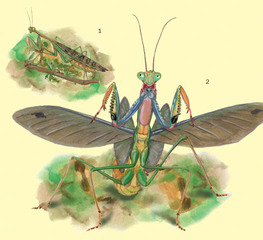
Mantodea

Mantophasmatodea
Lobophasma redelinghuisensis
Praedatophasma maraisi
Karoophasma biedouwensis

Mantis
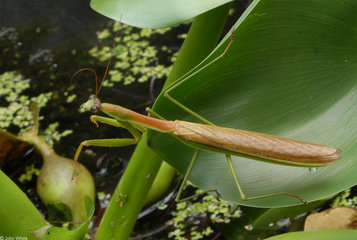
Tenodera aridifolia