
Search in Everything
Showing results in Everything for Mephitis mephitis
Information
Mephitis mephitis striped skunk
even females and a single male. While M. mephitis is known to remain in a single den throughout the winter, they may occupy multiple dens during periods of warmer weather. Individuals living in areas without a cold wintering period do not undergo dormancy. Mephitis mephitis will typically occupy a home range that is stretched in a linear fashion, with their den in the periphery. Mephitis mephitis relies primarily on visual displays to ward off predators or unwanted visitors and may resort to a chemical
Mephitis hooded skunk and striped skunk
America. Striped skunks (Mephitis mephitis) are found in the southern nearctic while hooded skunks (Mephitis macroura) are found in the northern neotropics. Striped skunks (Mephitis mephitis) avoid arid climates, such as the Mojave Desert in North America, but are ubiquitous in the rest of their range. Striped skunks (Mephitis mephitis) and hooded skunks (Mephitis macroura) live in a variety of ranges due to their generalist diet. However, striped skunks (Mephitis mephitis) do not live in extremely arid
Mephitis macroura hooded skunk
and M. m. richardsonii. Mephitis macroura eximus is known only in the lowlands of Central Veracruz, Mexico. Mephitis macroura macroura is located throughout southern Mexico, southwest of the Durango state all the way to Guatemala. Mephitis macroura milleri, the northern hooded skunk is found in the northern half of Mexico, up into the southern United States. Mephitis macroura richardsoni has the most southern distribution in Central America including Nicaragua and Costa Rica. The habitat occupied by hooded
Mephitidae skunks and stink badgers
one meter, whereas some skunks (e.g. Mephitis mephitis) can spray an attacker at distances over 6 meters. When confronted with a presumed threat, skunks first face the threat, raise their tails with hair standing on end, and might also stomp on the ground. Skunks may even stand on their forepaws in a "handstand" as they face their attacker. If sufficiently provoked, they will bend their bodies in a U-shape, aiming their hindquarters at the threat and spraying fluid. Typically, skunks aim for a predator's
Conepatus chinga Molina's hog-nosed skunk
Donadio et all, 2001). Conepatus chinga is medium sized, weighing approximately 2.3 to 4.5 kg, and measuring anywhere from 460 to 900 mm long from nose to tail. It has characteristic skunk coloring with generally black fur and 2 white stripes running from the top of the head down the sides of the body to a mostly white tail. It lacks the white stripe down the middle of its face that is common in Mephitis mephitis. Conepatus chinga also has a distintive nose, which is fairly broad and fleshy much like its
Microtus canicaudus gray-tailed vole
foxes (Vulpes vulpes, Urocyon cinereoargenteus), skunks (Mephitis mephitis) and domestic and feral cats (Felis catus). These are common predators to many other vole species as well. Mammalian associates of gray-tailed voles include vagrant shrews (Sorex vagrans), townsend moles (Scapanus townsendii), brush rabbits (Sylvilagus bachmani), eastern cottontails (Sylvilagus floridanus), California ground squirrels (Spermophilus beecheyi), camas pocket gophers (Thomomys bulbivorus), deer mice (Peromyscus
Agelaius tricolor tricolored blackbird; tricoloured blackbird
gray foxes (Urocyon cinereoargentus) and skunks (Mephitis mephitis). Larger birds, such as common ravens (Corvus corax), black-crowned night herons (Nycticorax nycticorax), northern harriers (Circus cyaneus) and Cooper’s hawks (Accipiter cooperii) also prey on tricolored blackbirds. In more urban areas, feral cats (Felis catus) prey on nests. Tricolored blackbirds do not fight back against predators and tend to be less aggressive than red-winged blackbirds. Many tricolored blackbirds are dependent on rice
Conepatus leuconotus North American hog-nosed skunks
and kill other species of skunks for being pests. Humans also unknowingly trap hog-nosed skunks due to their close coloring similarities to other species. They are also frequently roadkill. American hog-nosed skunks have overlapping territories with 4 species of skunks: striped skunks (Mephitis mephitis), hooded skunks (Mephitis macroura), eastern spotted skunks (Spilogale putorius), and western spotted skunks (Mephitis gracilis). Hog-nosed skunks tend to keep to themselves and avoid other species in their
Geomys texensis Central Texas pocket gopher
most vulnerable when they are at the surface feeding or moving debris and soil. They might be preyed upon by red foxes (Vulpes vulpes fulva) grey foxes (Urocyon cinereoargenteus), coyotes (Canis latrans), bobcats (Lynx rufus), owls, hawks, American hog-nosed skunks (Conepatus leuconotus), striped skunks (Mephitis mephitis) and domesticated cats (Felis catus). The only anti-predator adaptation Llanos pocket gophers have is camouflage, the color of their fur tends to blend in with the soil in their
Pseudemys texana Texas River Cooter
are nest predators. Additional predators at any age include red foxes (Vulpes vulpes), striped skunks (Mephitis mephitis), laughing gulls (Larus atricilla), American crows (Corvus brachyrhynchos) and raccoons.Raccoons are recorded as the most prolific nest predator for Texas river cooters. Fire ants also prey on female river cooters on land and actively digging nests. Irritation from the fire ants may cause the female river cooters to stop nesting and return to the water, keeping them from completing the
Pictures

Mephitis mephitis striped skunk

Mephitis mephitis striped skunk
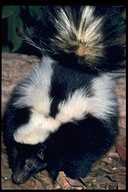
Mephitis mephitis striped skunk
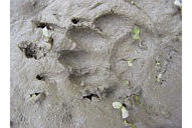
Mephitis mephitis striped skunk

Mephitis mephitis striped skunk
Specimens

Mephitis mephitis striped skunk

Mephitis mephitis striped skunk

Mephitis mephitis striped skunk
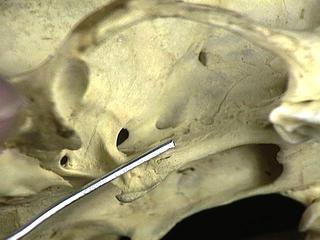
Mephitis mephitis striped skunk

Mephitis mephitis striped skunk
Classification
Mephitis hooded skunk and striped skunk
Mephitis macroura hooded skunk
Mephitis mephitis striped skunk