Plethodon serratusSouthern Red-backed Salamander
Geographic Range
Southern red-backed salamanders occur in four disjunct populations in the southern United States. These ranges are: the Salem Plateau of southeast Missouri, the Ouachita Mountains of extreme southeast Oklahoma and west-central Arkansas, the Piedmont Plateau and Blue Ridge Mountains of northwest Georgia and nearby portions of extreme eastern Alabama, eastern Tennessee, and western North Carolina, and, finally, in isolated locations in central Louisiana. (Bartlett and Bartlett, 2006; Camp, 1988; Conant and Collins, 1998; Petranka, 1998)
Habitat
Over most of its range, Plethodon serratus occurs in upland deciduous forests that contain abundant rocks or logs. In central Louisiana, this species lives among rocky hillsides in forests of longleaf pine. Plethodon serratus occurs in a range of moisture conditions, from moist mesic to drier, better-drained habitats. During the spring months from April to early June, P. serratus is associated with thick leaf litter and dead, downed wood. From September to March, these salamanders often take refuge under rocks and logs. During the warm summer months (June, July, and August) P. serratus tends to stay underground. During this time, these salamanders may burrow up to one meter into the soil. (Conant and Collins, 1998; Herbeck and Semlitsch, 2000; Petranka, 1998)
- Habitat Regions
- temperate
- terrestrial
- Terrestrial Biomes
- forest
-
- Range elevation
- 1690 (high) m
- 5544.62 (high) ft
Physical Description
Southern red-backed salamanders are small, narrow-bodied salamanders with short legs; they are best identified by their mid-dorsal stripe extending from the neck area to the tail. The stripe is orange or reddish, often with a serrated edge, especially in the Ouachita Mountain and Louisiana populations. Other populations may have less pronounced serration in the stripe. The serrated nature of the stripe led to the naming of this species P. serratus. Red coloring from the back may blend into the sides, but not on the belly. "Lead back" coloration, in which the dorsal coloration is dark, is also found in this species, similar to the lead-back morph found in their close relative, Plethodon cinereus. Southern red-backed salamanders may have from 18 to 21 costal grooves, varying geographically. The most common number of costal grooves for the species in Missouri is 18; Louisiana, Ouachita, and Blue Ridge individuals most commonly have 19; individuals in Georgia and Alabama have 20 or 21 grooves. Studies from three different geographic populations of these salamanders produced similar body size results. Adults range in size from 31 to 47 mm measured from snout to vent. Total length of adult salamanders is between 81 and 105 mm. Juveniles similar in color to adults. (Camp, 1988; Conant and Collins, 1998; Herbeck and Semlitsch, 2000; Petranka, 1998)
- Other Physical Features
- ectothermic
- heterothermic
- bilateral symmetry
- Sexual Dimorphism
- sexes alike
-
- Range length
- 8.1 to 10.5 cm
- 3.19 to 4.13 in
Development
There is no free larval stage in this species. (Camp, 1988; Conant and Collins, 1998; Petranka, 1998)
- Development - Life Cycle
- metamorphosis
Reproduction
Competition occurs among males for female mates. Males defend their territories more aggressively against other males compared to females, especially during the breeding season. There have not been any studies conducted specifically on the courtship behavior of Plethodon serratus. However, it can be assumed that their mating systems would be similar to their better-studied close relative, Plethodon cinereus. (Camp, 1999; Petranka, 1998)
The breeding season for Plethodon serratus is during the cool, moist winter months. Mating occurs between December and March. Females lay between 4 and 10 eggs in an underground cavity between May and July. They presumably attend their eggs during incubation, as do related species. Egg capsules average 4.5 mm in diameter. Juveniles complete the larval stage within the egg and hatch and emerge as independent, terrestrial salamanders by September or October. (Camp, 1988; Herbeck and Semlitsch, 2000; Petranka, 1998; Taylor, et al., 1990)
Plethodon serratus is first ready to reproduce between 24 and 36 months after hatching. Female salamanders were shown to breed annually in northern Georgia and Arkansas, and biennially in southeast Missouri. Regional differences in breeding interval has been observed in populations of other Plethodon salamanders as well, including the red-backed salamanders (Plethodon cinereus) and slimy salamanders (Plethodon glutinosus). It is likely that the Missouri population is exposed to climatic factors, such as temperature and rainfall, that cause it to have a different reproductive cycle than more southern populations. Other factors may include a more discontinuous activity period during winter when females must accumulate energy reserves in order to breed successfully. (Camp, 1988; Herbeck and Semlitsch, 2000; Petranka, 1998; Taylor, et al., 1990)
- Key Reproductive Features
- iteroparous
- seasonal breeding
- gonochoric/gonochoristic/dioecious (sexes separate)
- sexual
- fertilization
- oviparous
-
- Breeding interval
- Females breed biennially or annually. Males breed annually.
-
- Breeding season
- Breeding occurs from December to March. Oviposition occurs from May to July.
-
- Range number of offspring
- 4 to 10
-
- Average time to hatching
- 2 months
-
- Range age at sexual or reproductive maturity (female)
- 24 to 36 months
-
- Range age at sexual or reproductive maturity (male)
- 24 to 36 months
Assuming that their habits are similar to their close relative, Plethodon cinereus, with which they were once considered conspecific, female Plethodon serratus must accumulate sufficient energy to develop and yolk eggs, defend a nesting territory, and then to remain with their eggs for the approximate two-month incubation period. Males must expend energy in defending territories, producing sperm and spermatophores, and in courtship. (Camp, 1988; Petranka, 1998)
- Parental Investment
-
pre-fertilization
- provisioning
-
protecting
- female
-
pre-hatching/birth
-
provisioning
- female
-
protecting
- female
-
provisioning
Lifespan/Longevity
There have not been any published studies on the average or maximum lifespan of southern red-backed salamanders. Other salamanders in this genus have been known to live up to 25 years in the wild in rare cases. Since southern red-backed salamanders do not reproduce until they are 2 or 3 years old and some populations reproduce biennially, it is reasonable to assume a lifespan of several years to be normal in this species. ("Shenandoah Salamander", 2006)
Behavior
Southern red-backed salamanders maintain and defend territories against conspecifics. They are solitary and will not tolerate intruders in their territories, especially during the winter breeding season. In laboratory experiments, intruders avoided confrontation with resident salamanders regardless of size or age advantages. This experiment also showed that individuals were able to distinguish between their own scent and that of other salamanders. It is likely that southern red-backed salamanders use chemical signals as a way of establishing territories. (Camp, 1988; Camp, 1999; Herbeck and Semlitsch, 2000; Mathis, et al., 1998)
Southern red-backed salamanders exhibit predictable behaviors when two individuals confront each other in the wild. Aggressive behaviors include head bobbing, raising the body off the substrate, snout-touching, lunging, head-butting, biting, gripping, and chasing. Submissive behaviors include flattening the body and fleeing from an opponent. These behaviors allow salamanders to communicate and determine victory in territorial disputes. There is also some preliminary evidence that these salamanders may be able to remember past opponents. (Camp, 1999)
Southern red-backed salamanders exhibit seasonal differences in habitat preferences. During the hot, dry summer months, P. serratus will burrow into the ground to escape from desiccation and heat stress. Finding salamanders during the summer months is very difficult, although some may also be found near wet seepages and springs seeking refuge from hot, dry weather. (Bartlett and Bartlett, 2006; Conant and Collins, 1998; Herbeck and Semlitsch, 2000)
Like other woodland salamanders, southern red-backed salamanders are nocturnal. They are most likely to travel from under their protective refuges under logs or rocks on moist or rainy nights. (Conant and Collins, 1998; Mount, 1975)
- Key Behaviors
- terricolous
- fossorial
- nocturnal
- motile
- hibernation
- aestivation
- territorial
Home Range
No studies on the home range size of Plethodon serratus could be found. (Petranka, 1998)
Communication and Perception
Laboratory tests with southern red-backed salamanders indicate that chemoreception is important in communication between individuals. Animals are able to distinguish between their own scent marks and those of other salamanders. The ability of these salamanders to distinguish the presence of others helps them maintain territories. Intruders avoid confrontations with resident salamanders based on this scent recognition. (Mathis, et al., 1998)
Southern red-backed salamanders communicate with each other during territorial disputes using visual, tactile, and chemical clues. In addition to the aggressive and submissive behaviors listed in the "Behavior" section, these salamanders also communicate using some non-aggressive and passive-aggressive behaviors. They may contact other individuals with their nasal cirri or rub their chin against the other individual. Southern red-backed salamanders use tail wagging, mouth snapping, and looking at/away from another individual to communicate passive-aggressive behaviors. (Camp, 1999)
- Other Communication Modes
- scent marks
Food Habits
Southern red-backed salamanders eat small invertebrates. The highest percentage of their food by volume comes from ants and beetles. They also eat snails, annelids, mites, spiders, pseudoscorpions, millipedes, centipedes, isopods, and several other types of insects. (Bartlett and Bartlett, 2006; Petranka, 1998)
- Primary Diet
-
carnivore
- insectivore
- molluscivore
- vermivore
- Animal Foods
- insects
- terrestrial non-insect arthropods
- mollusks
- terrestrial worms
Predation
No specific studies have been published on predation on southern red-backed salamanders. The most likely predators include small woodland snakes, shrews, birds, small mammals like skunks, and perhaps larger salamander species. (Bartlett and Bartlett, 2006; Petranka, 1998)
- Anti-predator Adaptations
- cryptic
Ecosystem Roles
Plethodontid salamanders have been shown to be ecologically important in temperate forest ecosystems. The total biomass of plethodontid salamanders in a New Hampshire forest was shown to be equal to that of small mammals and greater than the biomass of birds. Plethodon cinereus, a close relative of P. serratus, made up 93.5% of the total salamander biomass. It is certain that woodland salamanders in the genus Plethodon play a significant role in the nutrient flow and food webs of their ecosystems. In addition, studies of species such as P. serratus can indicate environmental problems in their woodland habitats. (Burton and Likens, 1975; Herbeck and Semlitsch, 2000; Petranka, 1998)
Results from an experiment that altered the densities of other Plethodon salamanders, including Plethodon jordani, showed that when densities of the other species were reduced, there were no detectable effects on the density of southern red-backed salamanders. This finding suggests that P. serratus is not in direct competition with other, larger plethodontid salamanders. (Petranka, 1998)
Economic Importance for Humans: Positive
Small woodland salamanders help to cycle nutrients in woodland habitats and thus help maintain a healthy forest, certainly a benefit to humans. Their populations are indicators of the health of woodland ecosystems. Woodland salamanders are sometimes collected as fish bait. (Burton and Likens, 1975; Petranka, 1998)
- Positive Impacts
- research and education
Economic Importance for Humans: Negative
These salamanders are totally harmless to human interests.
Conservation Status
Plethodon serratus is currently not listed in any federal or state endangered species program. The species is generally common over much of its range, where suitable habitat remains. However, Plethodon serratus occurs mostly in isolated pockets in central Louisiana. Strip mining operations have resulted in further fragmentation of populations. At least one small population has been extirpated in west-central Louisiana due to strip mining. Others have likely shared a similar fate. The population of P. serratus in this state should be monitored closely since it is isolated from other populations. (Crnkovic, 2002)
The habitat of Plethodon serratus is being degraded in areas of the southern U.S. where intensive plantation forestry for pine trees is conducted. Populations of the species in Georgia are declining as a result of these forestry practices. (Petranka, 1998)
-
- IUCN Red List
-
Least Concern
More information
-
- IUCN Red List
-
Least Concern
More information
-
- US Federal List
- No special status
-
- CITES
- No special status
Other Comments
Plethodon serratus was formerly considered a subspecies of the widespread species Plethodon cinereus until studies suggested that the southern forms were genetically distinct enough to warrant being considered a separate species. (Highton and Webster, 1976; Petranka, 1998)
Contributors
Tanya Dewey (editor), Animal Diversity Web.
Ben Edwards (author), Michigan State University, James Harding (editor, instructor), Michigan State University.
Glossary
- Nearctic
-
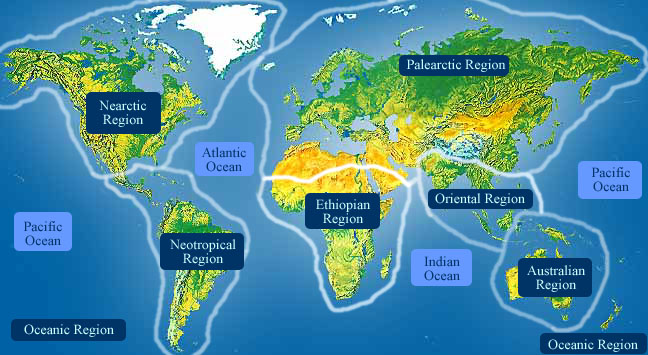
living in the Nearctic biogeographic province, the northern part of the New World. This includes Greenland, the Canadian Arctic islands, and all of the North American as far south as the highlands of central Mexico.
- bilateral symmetry
-
having body symmetry such that the animal can be divided in one plane into two mirror-image halves. Animals with bilateral symmetry have dorsal and ventral sides, as well as anterior and posterior ends. Synapomorphy of the Bilateria.
- carnivore
-
an animal that mainly eats meat
- chemical
-
uses smells or other chemicals to communicate
- cryptic
-
having markings, coloration, shapes, or other features that cause an animal to be camouflaged in its natural environment; being difficult to see or otherwise detect.
- ectothermic
-
animals which must use heat acquired from the environment and behavioral adaptations to regulate body temperature
- fertilization
-
union of egg and spermatozoan
- forest
-
forest biomes are dominated by trees, otherwise forest biomes can vary widely in amount of precipitation and seasonality.
- fossorial
-
Referring to a burrowing life-style or behavior, specialized for digging or burrowing.
- heterothermic
-
having a body temperature that fluctuates with that of the immediate environment; having no mechanism or a poorly developed mechanism for regulating internal body temperature.
- hibernation
-
the state that some animals enter during winter in which normal physiological processes are significantly reduced, thus lowering the animal's energy requirements. The act or condition of passing winter in a torpid or resting state, typically involving the abandonment of homoiothermy in mammals.
- insectivore
-
An animal that eats mainly insects or spiders.
- internal fertilization
-
fertilization takes place within the female's body
- iteroparous
-
offspring are produced in more than one group (litters, clutches, etc.) and across multiple seasons (or other periods hospitable to reproduction). Iteroparous animals must, by definition, survive over multiple seasons (or periodic condition changes).
- metamorphosis
-
A large change in the shape or structure of an animal that happens as the animal grows. In insects, "incomplete metamorphosis" is when young animals are similar to adults and change gradually into the adult form, and "complete metamorphosis" is when there is a profound change between larval and adult forms. Butterflies have complete metamorphosis, grasshoppers have incomplete metamorphosis.
- molluscivore
-
eats mollusks, members of Phylum Mollusca
- motile
-
having the capacity to move from one place to another.
- native range
-
the area in which the animal is naturally found, the region in which it is endemic.
- nocturnal
-
active during the night
- oviparous
-
reproduction in which eggs are released by the female; development of offspring occurs outside the mother's body.
- scent marks
-
communicates by producing scents from special gland(s) and placing them on a surface whether others can smell or taste them
- seasonal breeding
-
breeding is confined to a particular season
- sexual
-
reproduction that includes combining the genetic contribution of two individuals, a male and a female
- tactile
-
uses touch to communicate
- temperate
-
that region of the Earth between 23.5 degrees North and 60 degrees North (between the Tropic of Cancer and the Arctic Circle) and between 23.5 degrees South and 60 degrees South (between the Tropic of Capricorn and the Antarctic Circle).
- terrestrial
-
Living on the ground.
- territorial
-
defends an area within the home range, occupied by a single animals or group of animals of the same species and held through overt defense, display, or advertisement
- visual
-
uses sight to communicate
References
National Park Service. Shenandoah Salamander. Washington, D.C.: U.S. Department of the Interior, National Park Service. 2006. Accessed December 07, 2008 at http://www.nps.gov/shen/naturescience/shenandoah_salamander.htm.
Bartlett, R., P. Bartlett. 2006. Guide and Reference to the Amphibians of Eastern and Central North America (North of Mexico). Gainesville: University Press of Florida.
Burton, T., G. Likens. 1975. Salamander populations and biomass in the Hubbard Brook Experimental Forest, New Hampshire. Copeia, 3: 541-546.
Camp, C. 1988. Aspect of the life history of the southern red-back salamander Plethodon serratus Grobman in the southeastern United States. The American Midland Naturalist, 199: 93-100.
Camp, C. 1999. Intraspecific aggressive behavior in southeastern small species of plethodon: inferences for the evolution of aggression in terrestrial salamanders. Herpetologica, 55: 248-254.
Conant, R., J. Collins. 1998. A Field Guide to Reptiles and Amphibians of Eastern and Central North America. New York, NY: Houghton Mifflin Company.
Crnkovic, A. 2002. Dynamic changes in a geographic distribution brought about by radical habitat destruction. Proceedings of the Louisiana Academy of Sciences, 63: 44-46.
Herbeck, L., R. Semlitsch. 2000. Life history and ecology of the Southern Red-backed Salamander, Plethodon serratus, in Missouri. Journal of Herpetology, 34: 341-347.
Highton, R., T. Webster. 1976. Geographic protein variation and divergence in populations of the salamander Plethodon cinereus . Evolution, 30: "33-45".
Mathis, A., K. Deckard, C. Duer. 1998. Laboratory evidence for territorial behavior by the southern red-backed salamander, Plethodon serratus: influence of residency status and pheromonal advertisement. Southwestern Naturalist, 43: 1-5.
Mount, R. 1975. The Reptiles and Amphibians of Alabama. Auburn, AL: Auburn Printing Company.
Petranka, J. 1998. Salamanders of the United States and Canada. Washington, DC: Smithsonian Institution.
Taylor, C., R. Wilkinson, C. Peterson. 1990. Reproductive patterns of five Plethodontid salamanders from the Ouachita Mountains. The Southwestern Naturalist, 35: 468-472.